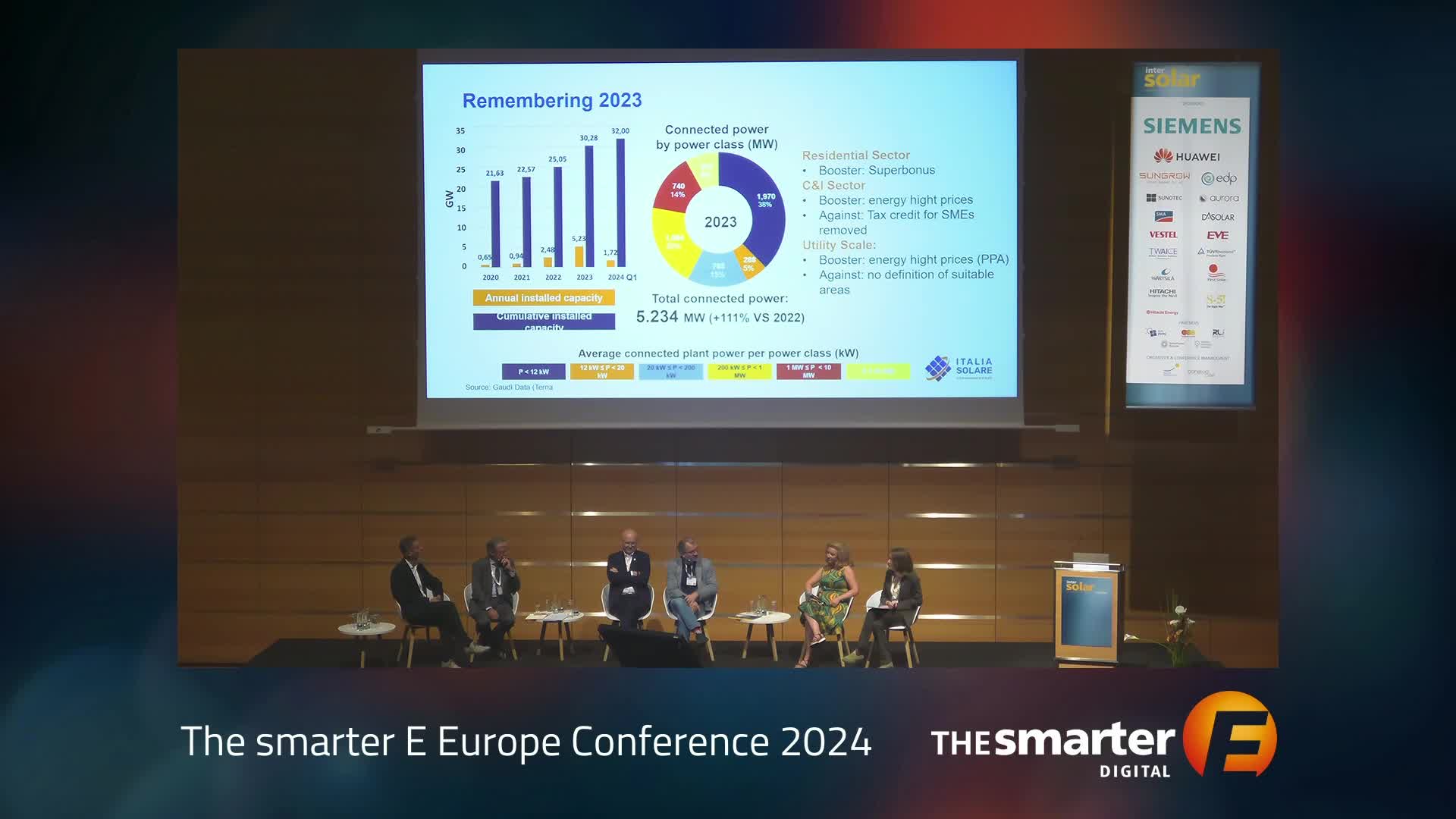
Recording of Tuesday, June 18, 2024 | The smarter E Europe | Conference Program | Language: English | Duration: 52:39 .
The discussion involves representatives from major European solar energy markets, including France and Bulgaria. Xavier Daval of kiloWattsol SAS reflects on the French market in 2023, describing it as good yet complicated due to inherent national complexities and regulatory changes. He highlights a shift in tariff regulations that impacted commercial installations (CNI), moving the cap from 100 kilos to 250 kilos without significantly increasing volume but changing market dynamics. Despite this growth, ground-mounted projects are shrinking, indicating stagnation rather than true expansion. The first quarter of 2024 shows promise with one gigawatt already installed; however, challenges like grid connection and permitting persist. Mariyana Yaneva represents APSTE from Bulgaria, which had an exceptionally positive year. She notes a significant historical peak in installation back in 2012 and expresses satisfaction at being recognized among leading European markets for solar energy—a notable change given Bulgaria's usual position behind other countries in Europe’s renewable energy sector standings.
Automatisierte Zusammenfassung durch AI Conver
Wijnand van Hooff
CEO
Holland Solar
The Netherlands
Mariyana Yaneva
Vice Chair
APSTE - the Association for Production, Storage and Trading of Electricity
Bulgaria
Paolo Rocco Viscontini
President
Italia Solare
Italy
José Donoso
General Director
Unión Española Fotovoltaica (UNEF)
Spain
Xavier Daval
CEO
kiloWattsol SAS
France
After three consecutive years of more than 40 percent growth in the European solar market, the main drivers - the energy crisis and resilience support programs - no longer apply: energy prices have dropped to almost pre-pandemic levels. The key question is: How can we maintain the solar growth momentum across the continent, from major to emerging markets?This session will cover: Status of solar power demand in Europe Updated European installation forecasts through 2028 Obstacles & opportunities in leading and major emerging European solar markets.
Further Talks of this session:
Speaker
Josefin Berg
Associate Director
S&P Global
Speaker
Raffaele Rossi
Head of Market Intelligence
SolarPower Europe
Belgium
Speaker
Daniel Schmitt
Founder & CEO
Memodo
Germany