Recording of Wednesday, June 19, 2024 | The smarter E Europe Conferences | Conference Program | Language: English | Duration: 10:09 .
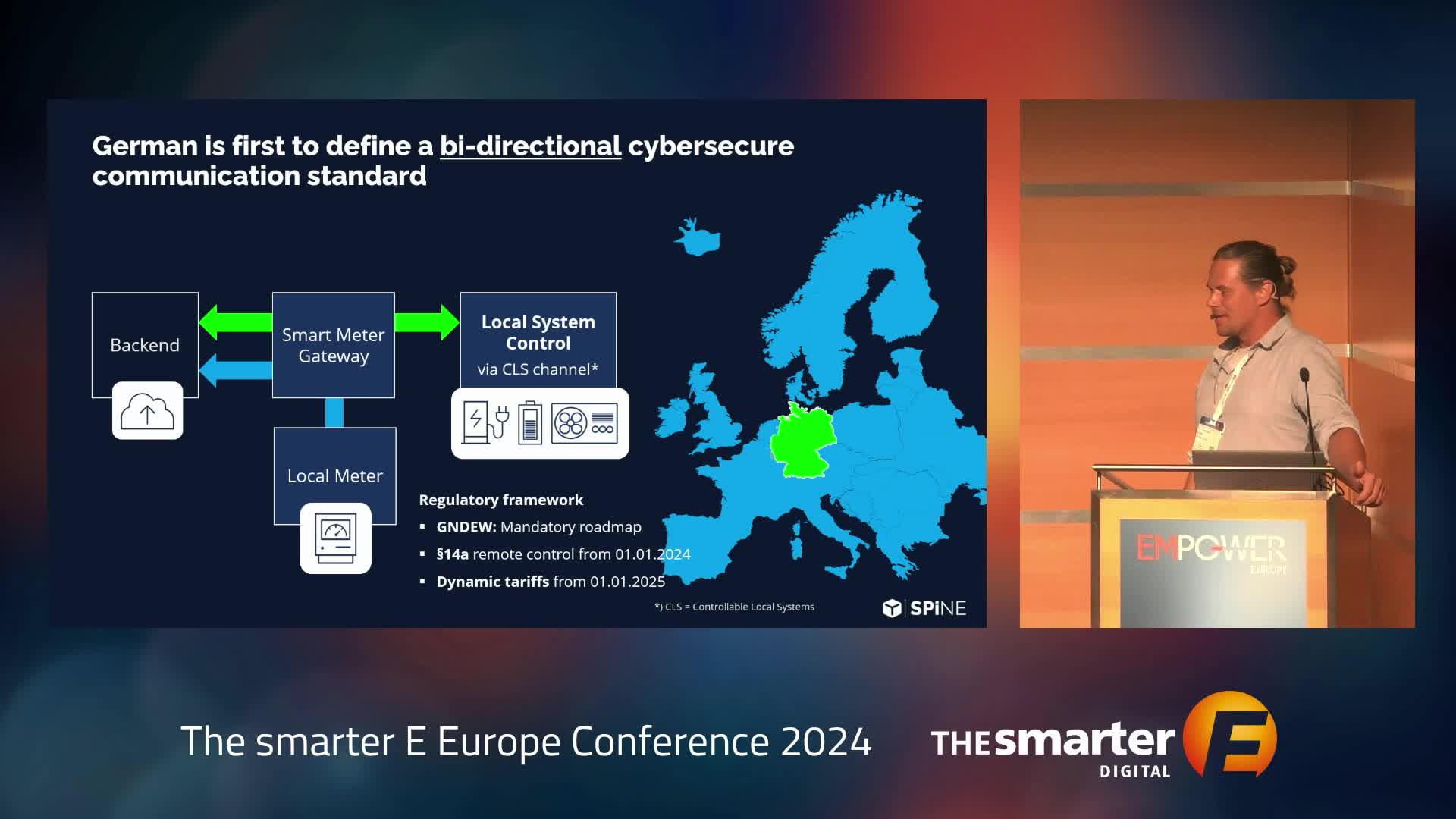
Dr. Thomas Müller, the CTO of SPiNE, discusses their innovative approach to making smart meters truly intelligent. Founded in February this year, with Thomas bringing over 11 years of experience in the energy sector, SPiNE aims to enhance smart meter functionality beyond traditional capabilities. Smart meters are transitioning homes into flexible assets by enabling load and production shifts for cost savings and grid stability. Historically, German households used Ferraris meters for manual readings; however, with new regulations like paragraph 14a (GNDW), Germany is adopting dynamic tariffs via large-scale smart meter rollouts. The current issue involves multiple devices being installed in households—by various operators—for different functionalities such as metering or managing emergency controls. This fragmentation hinders efficiency and drives up costs. SPiNE's vision parallels modern smartphones that integrate various functions into one device; they propose a similar consolidation using a CLS (Kommunikationsadapter) device capable of running diverse applications locally. By deploying apps from the cloud onto these local devices—akin to updating smartphone software remotely—they aim to lower installation and maintenance costs while increasing flexibility for future use cases. Ultimately, they aspire to create an interoperable ecosystem where evolving standards can be managed through over-the-air updates rather than physical replacements. SPiNE invites stakeholders on this mission towards smarter energy management systems built on adaptable technology frameworks.
Automatisierte Zusammenfassung durch AI Conver
Dr. Thomas Müller
Co-Founder / Technology & CTO
SPiNE GmbH
Germany
The shift towards a consumer-centric market design is essential for a green and digital transition. The seamless interaction between consumers and the energy system requires robust data flows and communication among DERs, market players and the system. This session focuses on how forward-thinking businesses, system operators and policymakers work together to build a reliable, interoperable and cyber-secure energy data ecosystem. Join the debate on key requirements such as data access, consumer flexibility, interoperability, standardisation and cybersecurity for interoperable data flows as we move towards a resilient and renewable energy service economy that benefits both system operators and consumers.
Further Talks of this session:
Speaker
Laurent Schmitt
Head of Utilities and European Developments & Use Case Coordinator
SmartEn, EDDIE
France
Speaker
Rick van Beek
Member of Expert Group Data & Interoperability
EU DSO Entity
Belgium
Speaker
Dr. Dimitrios Tzelepis
CTO Co-Founder
SMPnet
United Kingdom
Speaker